
CUSIP bond accounting securities play a central role in modern financial reporting, portfolio management, and investment tracking. For finance professionals, understanding how these identifiers function is not just a matter of technical knowledge—it is essential for maintaining accuracy, ensuring compliance, and improving decision-making in complex financial environments. Whether working in investment accounting, treasury operations, auditing, risk management, or fixed-income analysis, professionals regularly encounter the need to identify, classify, reconcile, and report securities with precision. This is where CUSIP bond accounting securities become highly valuable.
At its core, a CUSIP number is a unique identification code assigned to financial instruments, including bonds and other securities. In the world of bond accounting, these identifiers help eliminate confusion by distinguishing one security from another, even when issuers may have multiple offerings with similar structures, maturity dates, or coupon terms. As bond markets continue to expand and become more sophisticated, the ability to accurately reference specific instruments has become a foundational requirement in financial operations. That is why the topic of CUSIP bond accounting securities deserves close attention from every finance professional involved in securities processing and reporting.
The growing importance of CUSIP bond accounting securities can be seen across a wide range of accounting tasks. From trade capture and settlement to valuation, amortization, reconciliation, and disclosure, every stage of the bond lifecycle depends on correct security identification. A small mismatch in a bond’s identifier can create reporting errors, operational delays, compliance issues, or audit concerns. In contrast, when finance teams apply accurate CUSIP-based controls, they strengthen the reliability of financial records and improve the efficiency of internal processes. This makes CUSIP bond accounting securities more than a reference topic—they are an operational necessity.
For finance professionals, this subject also connects directly to transparency and accountability. Bond portfolios often contain large volumes of instruments issued by corporations, municipalities, government entities, and structured finance vehicles. Managing these holdings without a dependable identification system would be inefficient and risky. CUSIP bond accounting securities provide a standardized method for classifying instruments, supporting data integrity across systems, departments, and reporting frameworks. In an era where financial institutions must meet growing regulatory expectations and tighter reporting standards, a clear understanding of security identifiers is a major competitive advantage.
Another reason this topic matters is that CUSIP bond accounting securities support better communication between front-office, middle-office, and back-office teams. Traders, accountants, custodians, auditors, and analysts all rely on consistent identifiers to confirm that they are referring to the same instrument. This shared language reduces manual errors, supports automation, and improves collaboration across the financial reporting chain. For organizations managing significant fixed-income exposure, the use of accurate CUSIP data can streamline everything from daily reconciliations to year-end audit preparation.
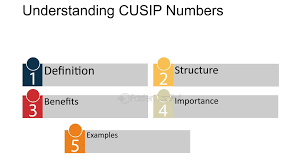
This guide is designed to help finance professionals build a strong, practical understanding of CUSIP bond accounting securities and their role in bond accounting workflows. It explores why these identifiers matter, how they support financial accuracy, and where they fit into the broader framework of securities management. As accounting systems become more data-driven and the demands on finance teams continue to rise, professionals who understand the mechanics and significance of CUSIP bond accounting securities will be better equipped to manage risk, enhance reporting quality, and contribute greater value to their organizations. In short, mastering CUSIP bond accounting securities is no longer optional for serious finance professionals—it is a key part of working smarter in today’s securities environment.
Why CUSIP Identification Matters in Bond Accounting
In bond accounting, precision is everything. A minor error in identifying a security can lead to reporting mismatches, reconciliation problems, settlement delays, and compliance concerns that affect the integrity of financial records. This is why cusip bond accounting securities are so important in the daily work of finance professionals. They provide a structured way to identify individual bond instruments accurately, helping organizations avoid confusion when multiple securities share similar issuer names, maturity profiles, or coupon structures. In highly regulated financial environments, that level of clarity is not just helpful—it is necessary.
The value of cusip bond accounting securities extends beyond simple identification. These codes support the entire accounting lifecycle of a bond, from acquisition and classification to valuation, amortization, impairment review, and final disposition. When securities are entered correctly into accounting systems using the right identifier, finance teams can process transactions more smoothly and reduce the risk of manual entry errors. This becomes especially important for institutions managing large bond portfolios where a single reporting period may involve hundreds or thousands of instruments. In such cases, cusip bond accounting securities become the backbone of data accuracy.
Another major reason these identifiers matter is their role in internal controls. Sound accounting practices depend on being able to verify that every recorded bond matches the correct issuer, terms, and transaction history. CUSIP-based identification helps strengthen audit trails by linking accounting entries to the exact instrument involved. This improves transparency for auditors, regulators, and internal stakeholders alike. A well-maintained system built around cusip bond accounting securities can therefore improve confidence in financial statements and reduce the operational stress that often accompanies month-end and year-end closing processes.
How CUSIP Bond Accounting Securities Support Financial Reporting
Financial reporting requires consistency, comparability, and accuracy, all of which depend on reliable data. Cusip bond accounting securities play a critical role in making that possible because they provide a standard reference point for each bond held or reported by an organization. Without such identifiers, finance teams would face greater difficulty in consolidating information across custodians, internal ledgers, portfolio systems, and external reporting platforms. The result could be fragmented reporting and an increased likelihood of discrepancies.
For accounting professionals, using cusip bond accounting securities improves the quality of disclosures related to fixed-income investments. These identifiers help ensure that each bond’s carrying value, fair value, interest income, premium or discount amortization, and maturity profile are assigned correctly. This is especially relevant when preparing supporting schedules for audits, board reports, and regulatory filings. Since reporting obligations often require exact instrument-level detail, the use of accurate identifiers becomes central to producing dependable financial statements.
In addition, cusip bond accounting securities make it easier to reconcile information from different sources. Portfolio managers may classify a bond one way, custodians may report it in another format, and accounting teams may need to align all of that data into a single reporting framework. The CUSIP identifier serves as the common thread that ties these records together. When used properly, it reduces the likelihood of duplicate entries, misclassification, or omitted securities. For finance professionals under pressure to deliver timely and accurate reports, this efficiency can make a major difference in workflow and reporting confidence.
The Operational Benefits of Accurate Security Identification
Operational efficiency is one of the most overlooked advantages of mastering cusip bond accounting securities. In many organizations, accounting issues do not arise because staff lack technical accounting knowledge. They arise because systems contain inconsistent data, incomplete identifiers, or mismatched security records. When a finance team uses precise CUSIP-based identification, it can process trades, settlements, reconciliations, and income recognition with much greater confidence and speed.
For example, when a bond is purchased, the accounting team must record the correct cost basis, assign it to the right investment category, and track future interest and amortization schedules. If the wrong instrument is entered, every downstream process may be affected. That can create a chain of corrections involving operations teams, accountants, custodians, and sometimes external auditors. Accurate handling of cusip bond accounting securities helps prevent such breakdowns before they begin. It creates a cleaner foundation for transaction processing and ongoing portfolio maintenance.
The operational benefits are even greater when automation is involved. Many modern accounting platforms and treasury systems rely on identifiers to import data, match positions, generate reports, and flag exceptions. If the identifiers are accurate, automation works more effectively. If they are wrong or inconsistent, automation can amplify the problem instead of solving it. This is why organizations that invest in strong control frameworks around cusip bond accounting securities often see improvements not only in compliance and accuracy but also in productivity. Cleaner data enables smoother workflows, faster closings, and better coordination across departments.
Common Challenges Finance Professionals Face With Bond Securities
Even experienced finance professionals can face challenges when managing cusip bond accounting securities, especially in complex or high-volume portfolios. One common issue is data inconsistency across systems. A bond may appear with one description in a trading platform, another in the custodian report, and a shortened label in the general ledger. Without a reliable identifier to unify those records, accountants may spend unnecessary time confirming whether they are reviewing the same instrument. This slows down reporting and increases the risk of human error.
Another challenge involves securities with similar characteristics. Large issuers often have multiple bond offerings with close maturity dates, similar coupon rates, or comparable issue sizes. In such situations, descriptive names alone are not enough. Professionals need cusip bond accounting securities to pinpoint the exact bond under review. This is particularly important during reconciliation, impairment testing, valuation review, and disposition accounting, where precision affects both financial reporting and strategic decisions.
Legacy systems and manual processes can create additional complications. Some organizations still depend on spreadsheets or outdated databases that do not integrate cleanly with modern portfolio or accounting systems. In these environments, the absence of standardized identifier practices can lead to duplication, omission, or mismatched holdings. By prioritizing accurate handling of cusip bond accounting securities, finance teams can reduce these pain points and move toward stronger, more reliable controls.
Why Finance Professionals Must Master This Topic
The financial world is becoming more data-driven, more regulated, and more interconnected. As a result, finance professionals are expected to do more than record transactions. They must interpret data, manage risk, support audits, and contribute to strategic decision-making. A strong understanding of cusip bond accounting securities helps professionals meet all of these expectations with greater competence and confidence. It equips them to handle bond portfolios with precision and to support financial reporting that stakeholders can trust.
Mastery of cusip bond accounting securities also enhances professional value. Employers increasingly seek accounting and finance personnel who understand not only accounting standards but also the systems and identifiers that support real-world investment operations. Professionals who can bridge the gap between accounting theory and securities data management are often better positioned for advancement in treasury, investment accounting, fund administration, audit support, and compliance functions.
Ultimately, cusip bond accounting securities are not just a technical detail buried inside financial systems. They are an essential part of accurate bond accounting, efficient operations, and reliable reporting. For finance professionals who want to reduce errors, strengthen controls, and improve the quality of their work, this knowledge is a practical asset with lasting importance.
Conclusion
In conclusion, cusip bond accounting securities are far more than simple identification codes within the financial system. They serve as a critical foundation for accuracy, transparency, and efficiency in bond accounting and reporting. For finance professionals who manage fixed-income instruments, understanding cusip bond accounting securities is essential for reducing errors, improving reconciliation, supporting audit readiness, and maintaining compliance across increasingly complex financial environments. Their value extends through every stage of the bond lifecycle, from purchase and classification to valuation, reporting, and final disposition.
As financial markets continue to evolve, the role of cusip bond accounting securities will remain central to strong operational control and reliable data management. Organizations that prioritize proper use of cusip bond accounting securities are better equipped to streamline workflows, strengthen internal controls, and produce more dependable financial statements. For accountants, analysts, auditors, and treasury professionals, this knowledge is not merely technical—it is strategic. A clear grasp of cusip bond accounting securities supports smarter decisions, better communication across teams, and improved confidence in financial reporting. In a profession where precision matters at every level, mastering cusip bond accounting securities is a practical step toward stronger performance and long-term professional success.
Turn Complex Case Data Into Stronger Client Victories
Unlock clarity, strengthen your strategy, and deliver better outcomes with a trusted partner dedicated to helping professionals build stronger cases. For more than 4 years, we have supported our associates with high-quality securitization and forensic audits designed to uncover critical details, support case development, and bring greater confidence to every stage of the process. Our work is built for professionals who need accuracy, insight, and dependable results when it matters most.
As an exclusively business-to-business provider, Mortgage Audits Online is committed to serving associates who demand a professional standard of analysis and case support. We help you move beyond uncertainty with focused audit solutions that can reveal the information needed to strengthen arguments, identify opportunities, and improve client outcomes. When your goal is to build a more compelling case, having the right audit partner can make all the difference.
Take the next step toward stronger documentation, sharper insight, and more confident case preparation with a team that understands the importance of precision and performance.
Mortgage Audits Online
100 Rialto Place, Suite 700
Melbourne, FL 32901
Phone: 877-399-2995
Fax: 877-398-5288
Visit: https://cusipdata.com/
“Disclaimer Note: This article is for educational & entertainment purposes”