
CUSIP bond accounting securities play a pivotal role in the world of fixed-income investing, audit readiness, and financial transparency. In today’s increasingly regulated financial environment, institutions, analysts, compliance teams, and reporting professionals depend on precise identification systems to track, verify, and reconcile securities accurately. Among the most important tools in this process is the CUSIP number, which serves as a unique identifier for a wide range of financial instruments, including corporate bonds, municipal bonds, U.S. government securities, and other debt-related assets. When integrated into accounting and reporting systems, cusip bond accounting securities provide a structured foundation that improves accuracy, minimizes risk, and supports stronger internal controls.
Understanding the value of cusip bond accounting securities begins with recognizing the challenge they solve. Bond portfolios often contain a large number of instruments issued by different entities, with varying maturity dates, coupon structures, and transaction histories. Without a standardized method of identification, tracking each instrument through purchase, valuation, reporting, reconciliation, and audit review can become highly complex. CUSIP identifiers simplify this process by assigning a distinct code to each eligible security, enabling financial teams to distinguish one bond from another with confidence and precision. This clarity is especially important in high-volume accounting environments where even minor discrepancies can lead to reporting errors or compliance concerns.
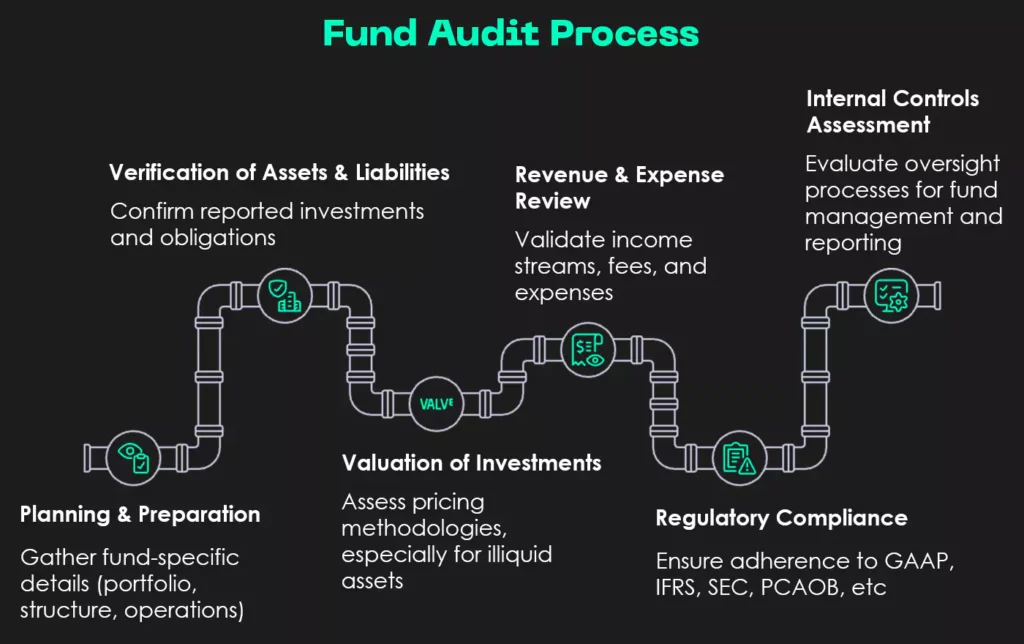
In the context of auditing, cusip bond accounting securities strengthen verification and documentation procedures by creating a direct link between recorded financial data and the underlying instruments. Auditors need to confirm that reported assets actually exist, are recorded properly, and are classified in accordance with applicable accounting standards. CUSIP-based tracking makes this process more efficient by helping firms match portfolio records with custodial statements, trade confirmations, pricing feeds, and internal ledgers. Instead of relying solely on descriptive names that may be abbreviated, duplicated, or inconsistently entered, accounting teams can use unique identifiers to support clean audit trails and more defensible financial records.
Compliance is another area where cusip bond accounting securities offer substantial value. Regulatory oversight continues to increase across financial markets, and firms are expected to maintain robust data governance practices that support transparency and accountability. Accurate security identification is essential for monitoring holdings, preparing disclosures, assessing risk concentrations, and meeting regulatory reporting obligations. By embedding CUSIP data into accounting workflows, organizations can improve consistency across departments and reduce the likelihood of misreporting. This is particularly beneficial for institutions handling complex fixed-income portfolios, where regulatory scrutiny can extend to classification, valuation methodology, asset exposure, and transactional integrity.
The reporting benefits of cusip bond accounting securities are equally significant. Financial statements, portfolio summaries, investment schedules, and compliance reports all require reliable underlying data. A CUSIP-centered accounting structure enables professionals to pull cleaner records, organize holdings more effectively, and generate reports with greater confidence. This not only supports internal decision-making but also enhances communication with auditors, regulators, investors, trustees, and other stakeholders. When stakeholders can clearly trace reported bond positions back to uniquely identified securities, confidence in the integrity of the reporting process naturally increases.
Another major advantage of cusip bond accounting securities is their role in operational efficiency. Accounting and reporting departments often work with multiple systems, including portfolio management software, general ledgers, custodial platforms, and third-party valuation tools. Disconnected or inconsistent security descriptions across these systems can create reconciliation issues, slow down month-end closes, and increase manual workload. CUSIP identifiers help standardize data across platforms, making it easier to align records and detect anomalies before they become larger problems. This consistency contributes to faster reconciliations, stronger quality control, and a more streamlined reporting environment.
As financial institutions continue to prioritize accuracy, transparency, and control, cusip bond accounting securities remain a vital element in modern bond accounting practices. They support stronger audits, reinforce compliance efforts, and improve the reliability of financial reporting from the ground up. For organizations seeking to reduce risk and build greater confidence in their fixed-income data, the disciplined use of cusip bond accounting securities is not just helpful—it is essential.
Why Accuracy in Security Identification Matters in Bond Accounting
In bond accounting, accuracy is not simply a technical requirement; it is the basis for trust, consistency, and regulatory confidence. Every bond recorded on a balance sheet or reflected in an investment report must be traceable, verifiable, and correctly classified. This is where cusip bond accounting securities become especially valuable. They help organizations ensure that each fixed-income instrument is identified with precision, reducing the possibility of confusion between similar issues, issuers, or maturity structures. In a market where multiple securities can carry comparable names but differ significantly in terms, relying on a standardized identifier creates a much stronger accounting framework.
Financial institutions, auditors, compliance teams, and portfolio managers all benefit when there is a common language for security identification. Cusip bond accounting securities provide that shared structure. Rather than depending only on issuer descriptions or manually entered transaction notes, firms can use CUSIP-based records to maintain clear, consistent documentation across departments. This improves reconciliation between accounting books, custodian statements, and valuation reports, while also reducing the chance of human error in daily operations.
The demand for precision becomes even more important when firms manage large or diversified portfolios. Government bonds, municipal bonds, agency securities, and corporate debt instruments may all sit within a single reporting system. Without a unique identifier tied to each holding, financial records can quickly become fragmented. Cusip bond accounting securities solve this problem by supporting uniform tracking from acquisition to maturity, helping teams preserve data integrity at every stage of the bond lifecycle.
The Role of CUSIP in Audit Preparedness and Evidence Gathering
Audit readiness depends on documentation that is complete, organized, and easy to validate. Auditors examine bond holdings to confirm existence, ownership, valuation, classification, and presentation. If records are inconsistent or difficult to match, the audit process becomes slower and more vulnerable to disputes. By integrating cusip bond accounting securities into accounting systems, organizations create a clearer path for audit verification. Each recorded security can be traced more efficiently to supporting documents such as trade confirmations, account statements, and pricing records.
This direct traceability strengthens audit evidence. Instead of reviewing security descriptions that may be abbreviated differently across systems, auditors can rely on a specific identifier linked to the exact instrument in question. That level of consistency helps reduce ambiguity, especially during sampling and substantive testing. It also allows internal accounting teams to respond to audit requests more quickly because the records are structured around reliable security-level data.
The value of cusip bond accounting securities in audits also extends to internal audit programs. Internal control teams often review whether investment records are being maintained in accordance with policy, whether reconciliations are being performed properly, and whether exceptions are being resolved promptly. A CUSIP-based structure helps them test controls more effectively by giving them a standardized way to evaluate holdings across reporting periods. In this sense, the use of cusip bond accounting securities supports not only external audit success but also stronger internal governance and operational discipline.
How CUSIP-Based Bond Records Improve Compliance Oversight
Compliance in bond accounting is closely tied to the quality of underlying data. Regulatory reporting, investment disclosures, portfolio restrictions, and risk monitoring all depend on accurate identification of the securities being held. Cusip bond accounting securities improve compliance oversight because they make it easier to monitor specific instruments and confirm that records align across financial, operational, and regulatory functions. When a bond is recorded with a precise identifier, firms can more confidently assign classifications, verify issuer exposure, and apply the proper reporting treatment.
This is particularly important for organizations operating under strict internal policies or external regulatory frameworks. Compliance teams may need to confirm whether a portfolio exceeds exposure limits, contains restricted instruments, or meets specific investment criteria. When records are inconsistent, those reviews become more difficult and less dependable. Cusip bond accounting securities help create a cleaner data environment where compliance testing can be performed with greater confidence and fewer manual adjustments.
Another important compliance advantage lies in reporting consistency. Different departments often handle accounting entries, investment operations, disclosure preparation, and risk analysis. If each team uses slightly different descriptions for the same bond, inconsistencies can spread through the organization. A CUSIP-centered method helps unify reporting language and reduce the chance of conflicting records. As a result, cusip bond accounting securities contribute to stronger compliance documentation, improved transparency, and better readiness for reviews by regulators, trustees, or oversight bodies.
Reporting Reliability and the Importance of Data Consistency
Reliable reporting is one of the most visible outcomes of good bond accounting practices. Stakeholders expect financial reports to reflect accurate holdings, fair values, income recognition, and classifications. When bond records are not standardized, reporting errors can occur during aggregation, reconciliation, or disclosure preparation. Cusip bond accounting securities support reporting reliability by giving accounting teams a dependable identifier that remains consistent across multiple systems and reporting cycles.
This consistency is essential during month-end, quarter-end, and year-end close processes. At these points, finance teams often pull data from several sources, including custodians, portfolio systems, pricing services, and general ledgers. If bond descriptions vary, matching and validating positions becomes more time-consuming. Cusip bond accounting securities simplify this process by reducing dependence on descriptive text and replacing it with a recognized identification structure. That helps teams prepare reports faster while maintaining stronger control over the accuracy of the information presented.
Clear reporting also matters for external stakeholders. Investors, auditors, boards, regulators, and business partners all rely on financial statements and supporting schedules to understand bond-related exposures and financial health. When the data behind those reports is built around cusip bond accounting securities, it becomes easier to defend the reported numbers and explain how each holding is represented. The result is greater trust in the reporting process and a stronger reputation for accuracy and accountability.
Strengthening Reconciliation Processes Across Multiple Systems
Reconciliation is one of the most important control activities in bond accounting, and it can also be one of the most challenging. Firms often need to compare holdings and transactions across custodial platforms, accounting software, portfolio management systems, and internal spreadsheets. Differences in naming conventions can make this process slow and error-prone. By using cusip bond accounting securities, organizations gain a more stable reference point that improves reconciliation accuracy and reduces unnecessary investigation time.
When a bond is identified by a unique CUSIP, matching records across systems becomes far more efficient. Teams can quickly determine whether two records represent the same instrument, even if descriptions are formatted differently. This saves time during daily, monthly, and quarterly reconciliations and allows staff to focus on true discrepancies rather than formatting issues. In large portfolios, that operational efficiency can significantly improve workflow and reduce the cost of maintaining accurate records.
The role of cusip bond accounting securities in reconciliation also supports stronger exception management. When breaks occur, teams need to isolate the issue and determine whether it relates to timing, valuation, trade settlement, classification, or data entry. A standardized identifier makes that investigation process more manageable. Instead of sorting through multiple similar descriptions, professionals can focus on the exact security affected. Over time, this leads to better resolution practices, fewer repeated errors, and a more resilient accounting environment.
Why CUSIP Bond Accounting Securities Support Long-Term Financial Control
Strong financial control is built on systems and processes that remain dependable over time. Bond portfolios change as instruments are purchased, sold, matured, called, or reclassified, but the need for accurate tracking never disappears. Cusip bond accounting securities provide long-term support for this control environment because they help preserve continuity across accounting periods, audit cycles, and reporting requirements. They give organizations a consistent reference that remains useful throughout the life of a security and beyond.
This long-term value is especially important for historical review and record retention. Auditors, regulators, or management teams may need to examine prior-period transactions or compare reporting changes across multiple years. When records are anchored by cusip bond accounting securities, those reviews become much easier to perform. The organization can trace a bond’s activity more clearly, support past accounting decisions, and demonstrate that its reporting framework is grounded in structured data rather than inconsistent descriptions.
Ultimately, the use of cusip bond accounting securities reflects a broader commitment to precision, transparency, and responsible financial management. They strengthen audits by improving traceability, enhance compliance by supporting clearer oversight, and improve reporting by creating a more consistent data foundation. In a financial environment where detail matters and accountability is constantly tested, organizations that rely on cusip bond accounting securities are better positioned to maintain confidence, reduce risk, and uphold the integrity of their bond accounting practices.
Conclusion
In conclusion, cusip bond accounting securities are far more than simple identification tools within the financial landscape. They serve as an essential foundation for accurate bond tracking, stronger audit preparation, reliable compliance oversight, and transparent financial reporting. As organizations continue to manage increasingly complex portfolios and face growing regulatory expectations, the importance of maintaining precise and standardized security records becomes impossible to ignore. This is exactly where cusip bond accounting securities deliver lasting value.
By helping firms identify each bond with clarity, cusip bond accounting securities reduce reporting errors, improve reconciliation efficiency, and support a cleaner audit trail across multiple systems and records. Their role in strengthening internal controls also makes them highly valuable for institutions that must demonstrate accountability, consistency, and data integrity in every reporting cycle. Whether used for portfolio verification, disclosure support, or compliance monitoring, cusip bond accounting securities contribute directly to stronger financial discipline and better decision-making.
For firms seeking accuracy, operational control, and confidence in their bond accounting processes, cusip bond accounting securities remain a critical asset. Their continued use supports a more organized, defensible, and trustworthy financial reporting environment in an increasingly demanding regulatory world.
Turn Complex Case Data into Clear, Credible Financial Insight
When your clients depend on precision, documentation, and credible financial analysis, your business needs a partner that delivers more than surface-level review. At Mortgage Audits Online, we help professionals build stronger, better-supported cases through detailed securitization analysis and forensic audits designed for serious business use. For more than four years, we have supported our associates with the insight, structure, and documentation needed to move forward with greater confidence.
Our work is built for organizations that understand the value of accuracy, strategy, and well-developed case support. As an exclusively business-to-business provider, we focus on helping industry professionals strengthen their services, enhance client outcomes, and present findings with greater authority. Whether you are working through complex loan issues, securitization questions, or the need for in-depth forensic review, our team is committed to delivering the kind of reliable audit support that can make a meaningful difference.
This is your opportunity to work with a trusted B2B resource that understands how to turn complicated financial data into actionable intelligence. With a strong foundation in securitization and forensic audits, we help our associates uncover critical details, reinforce case strategy, and support more effective decision-making at every stage.
Choose a professional partner that is committed to helping you elevate your service standards and deliver stronger results for the clients who rely on you most.
Mortgage Audits Online
100 Rialto Place, Suite 700
Melbourne, FL 32901
Phone: 877-399-2995
Fax: 877-398-5288
Visit: https://cusipdata.com/
“Disclaimer Note: This article is for educational & entertainment purposes”